Every successful ecommerce brand starts in a very ordinary place.
Not with a huge warehouse. Not with a team of 20. Not with hundreds of orders pouring in every day.
It starts with one person, one idea, a handful of products, and a lot of questions.
Will people buy this? Is my website good enough? How do I ship orders? What happens if a customer wants a refund? Why is my inventory number wrong again?
That is the real beginning of the ecommerce entrepreneur journey.
And while the path from beginner to brand builder can look different for everyone, most founders go through the same stages: learning the basics, doing everything themselves, getting their first signs of momentum, and eventually building a business that can grow without depending on them for every small task.
Stage One: The “I’ll Figure It Out” Beginning
At the start, you do everything.
You choose products. You write descriptions. You take photos. You build your Shopify store at midnight. You answer customer messages from your phone. You print labels, pack orders, update inventory, and celebrate every notification that says, “You made a sale.”
It is exciting—but it is also messy.
You will probably make mistakes:
-
You may price something too low.
-
You may order too much stock—or not enough.
-
You may spend hours changing a product page that barely anyone sees.
-
You may learn, the hard way, that customers expect fast replies and clear delivery updates.
None of this means you are failing. It means you are learning the real work behind running an ecommerce business.
At this stage, the goal is not perfection. The goal is proof.
You need to prove that people want what you are selling, that you can deliver it reliably, and that you can create an experience people trust.
Stage Two: The First Orders—and the First Reality Check
The first orders feel incredible.
Someone who does not know you has seen your product, trusted your store, entered their payment details, and chosen to buy. That is a big deal.
But as orders grow, so does the work behind them.
One order means one customer. Ten orders mean ten customers with questions, delivery expectations, return requests, address changes, and product concerns. Soon, you realise that selling a product is only one part of ecommerce.
The other part is everything that happens after someone clicks “Buy now.”
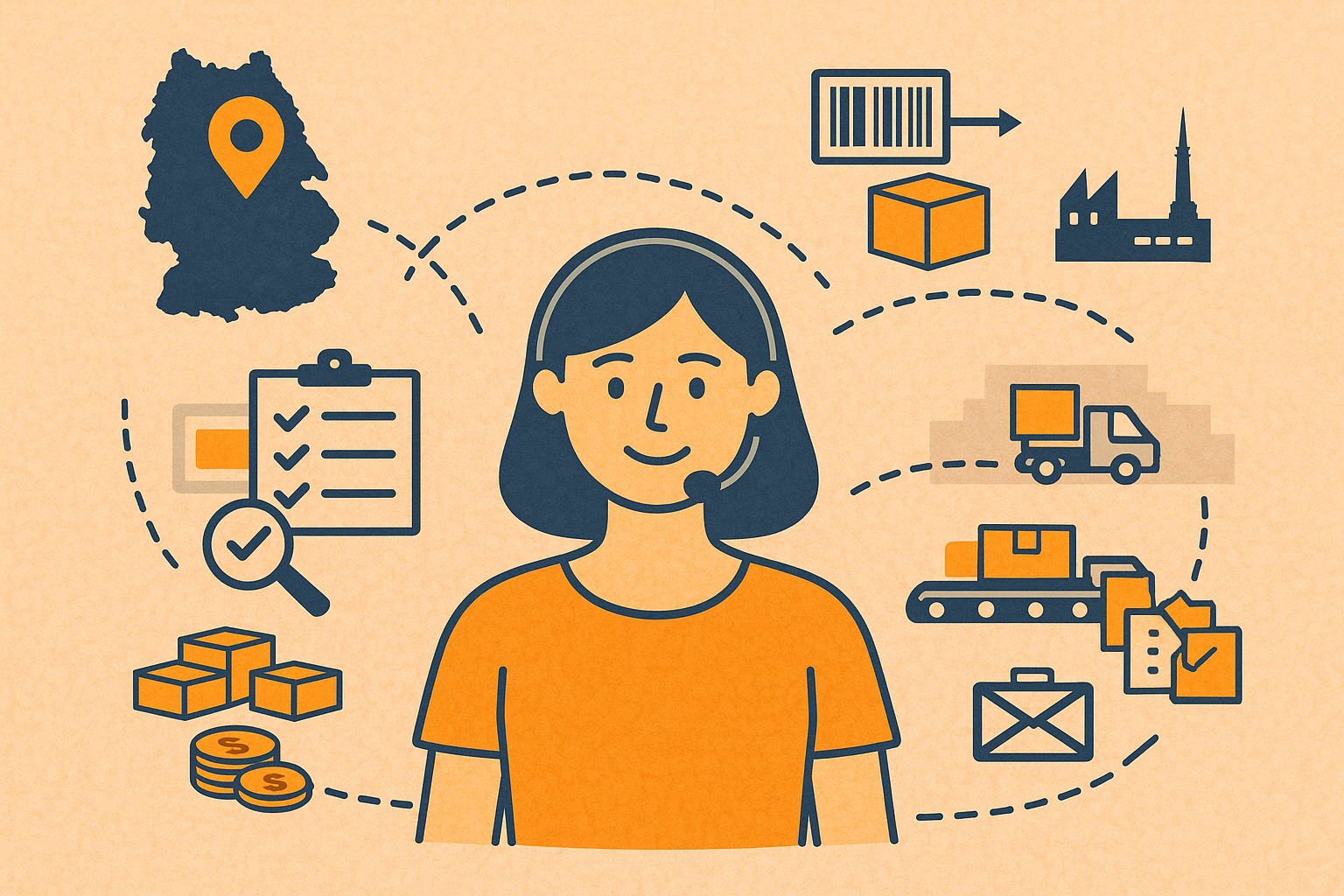
This is where many beginner ecommerce entrepreneurs feel overwhelmed. They thought the challenge would be getting traffic. Instead, they are dealing with:
-
Order confirmation and tracking messages
-
Customer support emails
-
Stock updates
-
Supplier follow-ups
-
Product listing edits
-
Returns and refunds
-
Marketplace issues
-
Content and social media requests
Your business may be growing—but your to-do list is growing faster.
Stage Three: When Being Busy Is No Longer a Good Sign
At first, being busy feels like progress.
You are working late. Your inbox is full. You have orders to ship. You are always doing something.
But eventually, being busy stops being a sign that the business is moving forward. It becomes a sign that the business depends too heavily on you.
This is the moment many ecommerce entrepreneurs reach a turning point.
You are no longer just building a store. You are running an operation.
And if every customer issue, listing change, stock update, or supplier email needs your attention, then you are not just the founder—you are the customer support team, the operations manager, the warehouse coordinator, and the product admin all at once.
That works for a while. It does not work forever.
Stage Four: The Shift From Store Owner to Brand Builder
The biggest difference between someone who runs an online store and someone who builds a real ecommerce brand is not the logo, the packaging, or even the number of followers.
It is the ability to create systems.
Brand builders understand that growth cannot rely on memory, panic, and late-night catch-up sessions. They start asking better questions:
-
What work repeats every day or every week?
-
Which tasks need my decision—and which only need clear instructions?
-
Where are errors happening most often?
-
What happens if I take two days away from the business?
-
Who owns customer support, product updates, and order follow-ups?
This is when the business starts becoming more stable.
You document how returns are handled. You create templates for common customer messages. You organise product information. You set rules for discounts, replacements, and escalation. You stop treating every problem as a brand-new emergency.
That is not boring back-office work. That is how a brand becomes reliable.
Stage Five: Learning What to Keep and What to Let Go
Delegation can feel uncomfortable, especially when you have built everything yourself.
You know the brand voice. You know your products. You know which customer complaint needs extra care and which one can be handled with a simple reply.
But holding onto every task is not the same as protecting quality.
The goal is not to hand everything away. The goal is to keep the work that needs your vision and hand off the work that needs consistency.
As the founder, you should stay close to:
-
Product choices and product quality
-
Brand direction and customer experience standards
-
Pricing and promotions
-
Big supplier or partnership decisions
-
Growth strategy
But repeatable work can be supported by the right people and systems:
-
Answering routine customer questions
-
Updating product listings and prices
-
Processing basic returns or exchanges
-
Tracking orders and delivery issues
-
Maintaining inventory sheets
-
Preparing weekly reports
-
Organising product data and store admin
This is where an ecommerce virtual assistant can make a real difference. A trained VA is not there to replace the founder’s voice or vision. They are there to make sure that day-to-day work does not consume it.
Stage Six: Building a Brand That Can Breathe
A healthy ecommerce business should not collapse because the founder takes a day off.
That does not mean you disappear from the business. It means the business has a rhythm.
Orders are checked. Customers receive replies. Listings are updated. Inventory is monitored. Problems are logged and escalated properly. You know what is happening without needing to be in every inbox, spreadsheet, or marketplace dashboard.
That is the real goal.
Not “passive income.” Not pretending ecommerce is effortless.
The goal is a business that can breathe.
A business where you can spend more time creating better products, building stronger customer relationships, improving your brand, and thinking about where you want to go next.
The Ecommerce Entrepreneur Journey Never Really Ends
There is no exact moment when you suddenly become a “real” ecommerce entrepreneur.
You become one every time you learn from a customer complaint. Every time you improve a product page. Every time you fix a process that used to cause stress. Every time you choose to build a system instead of carrying another task alone.
From beginner to brand builder, the journey is not about doing everything perfectly.
It is about learning what matters, building trust with customers, and slowly creating a business that does not need you to hold every piece together.
At Ecommerceally, we support founders at that turning point—when the store has real potential, but the daily workload is becoming too much for one person. With ecommerce-trained virtual assistants and practical operational support, we help founders step out of repetitive work and back into the role only they can do: building the brand.