When people hear the phrase “brand story,” they often picture a bold homepage banner with a catchy headline and a beautiful image. Once that’s in place, they assume the storytelling is done. But that’s not how customers experience an ecommerce store.
Today’s shoppers don’t build trust from a single headline. They form opinions as they browse your products, read your descriptions, compare categories, check your reviews, and look for answers before making a purchase. Every interaction tells them something about your brand.
A compelling banner may grab attention, but it can’t carry your identity on its own. The brands customers remember are the ones that feel consistent, clear, and trustworthy from the first click to the final checkout.
That’s why your brand story shouldn’t be treated as decoration. It should be the structure that holds your entire store together.
What Brand Story Really Means in Ecommerce
Many businesses think brand story is simply explaining how the company started or writing a mission statement on the About page. Those things matter, but they’re only a small part of the picture.
In ecommerce, your brand story is reflected in every decision you make about how your store communicates. It influences your tone of voice, the way products are presented, your visual style, how categories are organized, and even how you answer customer questions.
Think about two stores selling nearly identical products. One uses generic product descriptions, inconsistent messaging, and scattered visuals. The other has a clear personality, speaks directly to its audience, and creates a smooth, cohesive shopping experience.
The difference isn’t just better writing. It’s a stronger brand story.
Instead of living on a single page, your story should be woven into every customer touchpoint.
Why Banners Are Not Enough
A homepage banner has one job: encourage visitors to keep exploring.
It cannot explain who you are, prove your credibility, or create a memorable shopping experience by itself.
Many ecommerce stores invest heavily in designing an attractive hero section but leave the rest of the website feeling disconnected. Product pages sound generic. Categories lack personality. The FAQ reads like it belongs to a completely different company.
Customers notice these inconsistencies, even if they don’t consciously think about them.
When people shop online, they’re constantly looking for signals that help them decide whether a brand is trustworthy. They expect the experience to feel connected from beginning to end.
-If your homepage promises premium quality but your product descriptions feel rushed, that promise loses credibility.
-If your visuals communicate luxury while your customer support copy sounds robotic, the experience feels inconsistent.
-A banner may capture attention, but consistency earns confidence.
How Your Story Should Appear Across the Entire Store
A strong ecommerce story isn’t hidden in one section. It should quietly reinforce your brand wherever customers interact with it.
Product Pages
Product pages should do more than list features and specifications.
The language, photography, descriptions, and benefits should reflect your brand personality while helping customers understand why your products are different.
Every product should feel like it belongs to the same brand—not like it was copied from a supplier catalog.
Category Pages
Category pages are often overlooked, but they’re valuable storytelling opportunities.
Instead of acting as simple product lists, they can guide customers, explain collections, and reinforce what your brand stands for.
Clear organization combined with thoughtful copy helps shoppers navigate with confidence.
Homepage Sections
Your homepage shouldn’t rely entirely on one large banner.
Supporting sections can communicate your values, highlight what makes your products unique, answer common buying questions, and reinforce your positioning throughout the page.
Each section should strengthen the story rather than repeat the same message.
Reviews and Trust Signals
Customer reviews, testimonials, certifications, guarantees, and user-generated content all become part of your brand story.
These elements provide proof that your promises match real customer experiences.
Authenticity builds trust far more effectively than polished marketing copy alone.
Support and FAQ Language
Even your help pages contribute to how customers perceive your business.
A thoughtful FAQ, clear shipping information, and friendly support language reassure buyers that they’ll be taken care of after the purchase—not just before it.
These details often determine whether someone feels comfortable placing an order.
Where Ecommerceally Fits In
At Ecommerceally, we often see brands with strong products but weak storytelling across their digital touchpoints. That gap is where the brand feels incomplete. Our work across ecommerce content, store setup, and marketplace management helps businesses build a more consistent and credible presence from the first click to the final purchase.
When every part of the store communicates the same message, customers don’t just browse—they understand what makes the brand worth choosing.
The Cost of Weak Storytelling
The ecommerce space has never been more competitive.
Every day, shoppers compare dozens of stores selling products that often look remarkably similar.
Without a clear story, your business becomes just another option.
Weak storytelling doesn’t always mean poor writing. More often, it shows up as inconsistency. One page sounds professional, another feels generic, and another could belong to an entirely different brand.
Over time, this creates a store that’s difficult to remember.
Customers may like your products, but they won’t recall what made your business different.
Strong brands don’t rely solely on price or promotions to stand out. They’re remembered because every interaction reinforces a clear identity.
When your story is consistent, customers begin to recognize your voice, understand your values, and trust your brand. That familiarity becomes a competitive advantage that’s difficult for others to copy.
Your Brand Story Is Infrastructure, Not Decoration
A homepage banner can make a great first impression. But lasting trust comes from everything that follows.
Your product pages, categories, customer reviews, support content, navigation, and overall shopping experience should all tell the same story. When they do, your store feels intentional, credible, and memorable.
The strongest ecommerce brands don’t treat storytelling as a design element.
They build it into the foundation of the entire customer journey.
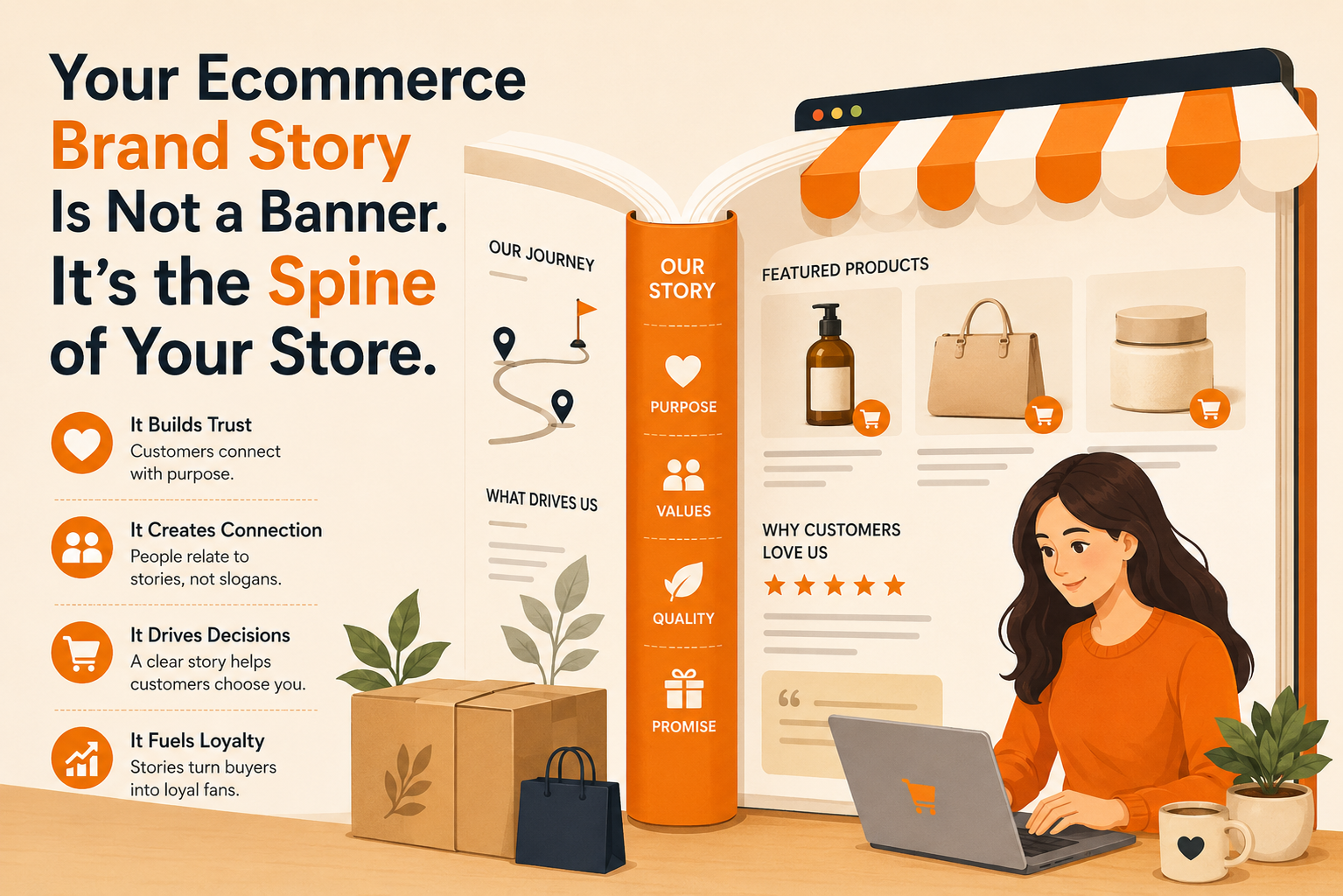
Because in ecommerce, your brand story isn’t a banner—it’s the spine that supports every click, every page, and every purchase.