Being busy does not always mean your business is growing.
You can have orders coming in, clients messaging you, a full inbox, and a to-do list that never seems to end—and still feel like you are working far too hard for the money you are making.
That is one of the most frustrating stages of being a solopreneur.
You are no longer wondering whether people want what you sell. They do. The bigger question is whether your current prices give you enough room to deliver quality, cover your costs, pay yourself properly, and build a business that can grow without exhausting you.
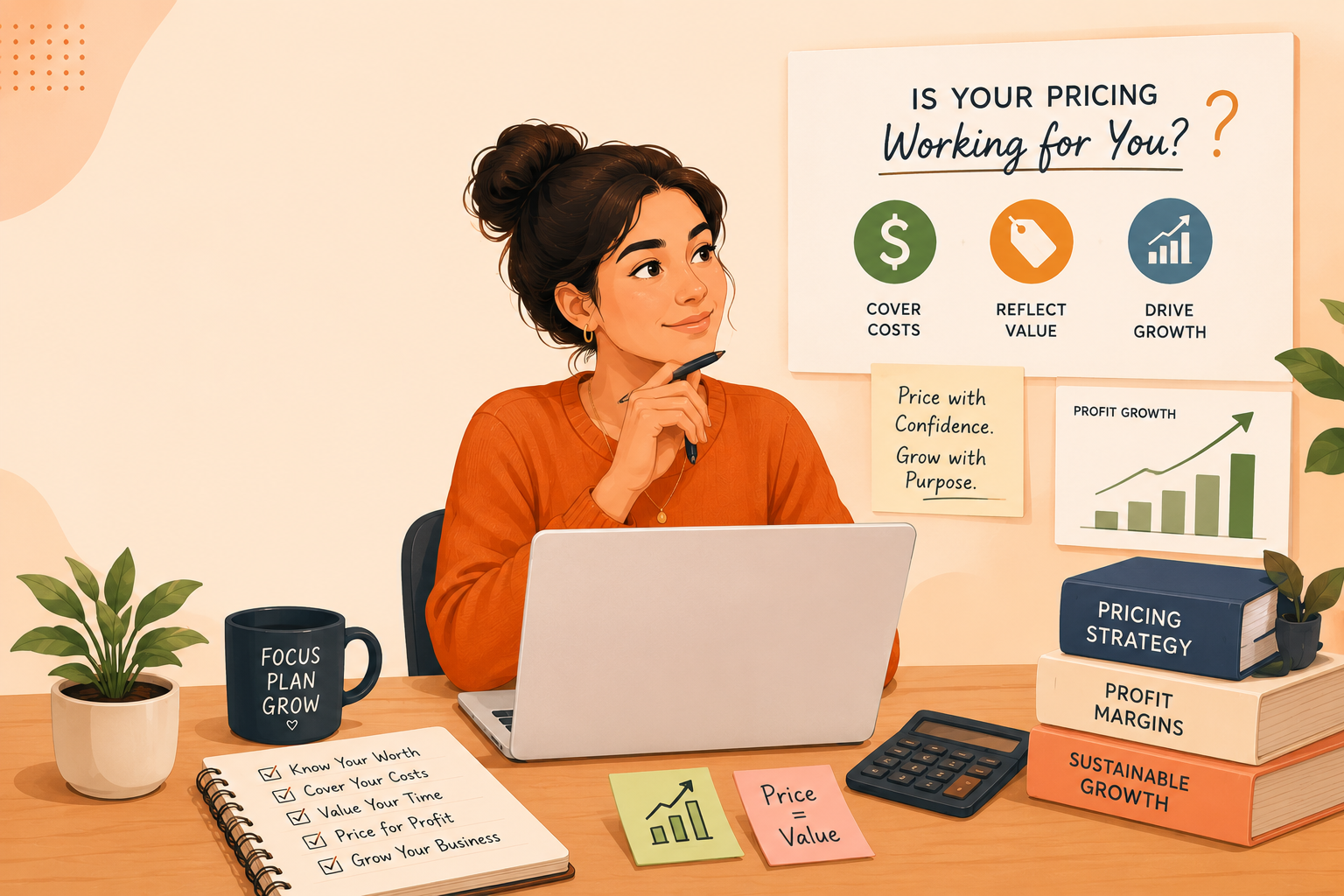
This is your pricing check.
The Difference Between Sales and Sustainable Growth
More sales sound like progress. And sometimes they are.
But if every sale brings a small margin, more customer messages, more fulfilment work, more inventory pressure, and more late nights, then more sales may simply mean more work.
A sustainable price has to cover more than the product itself.
For an ecommerce business, the true cost of one order can include:
-
Product sourcing or manufacturing
-
Packaging
-
Shipping and fulfilment
-
Marketplace or platform fees
-
Payment-processing fees
-
Returns, replacements, and customer support
-
Advertising and content costs
-
Your own time managing the business
If your price only covers the product and shipping, you may be making sales without building real profit.
For service-based solopreneurs, the same idea applies. Your price needs to account for delivery time, admin, tools, communication, revisions, taxes, non-billable work, and the time required to find your next customer.
The goal is not to charge as much as possible. The goal is to charge enough to run a business that can last.
Sign One: You’re Getting Sales, But There’s Never Money Left Over
A common warning sign is this: revenue looks fine, but your bank balance does not.
You pay suppliers, cover shipping, settle platform fees, replace damaged products, run a promotion, and suddenly there is very little left for you.
That does not always mean you need more customers. It may mean you need a stronger margin.
Your price should leave room for the unexpected, too. A late delivery, a return, a refund, or an increase in supplier costs should not throw your whole month into panic.
Sign Two: Your Costs Have Changed but Your Prices Haven’t
Businesses change. Supplier prices change. Shipping costs change. Packaging costs change. Even the tools you use to run your store add up over time.
If your business has become more expensive to operate but your price has stayed the same, you may be quietly absorbing those costs yourself.
That can feel like “keeping prices fair,” but it is not sustainable if it means you cannot pay yourself or invest back into the business.
Review your pricing whenever there is a meaningful change in your costs, not only when you feel completely overwhelmed.
Sign Three: You’re Fully Booked or Constantly at Capacity
If you are a service-based solopreneur, this is one of the clearest signals.
You are saying yes to every client, your calendar is packed, and you are still working evenings to keep up. You may even be turning away work because there is simply no room left.
For product-based businesses, the equivalent may be consistently selling through stock, managing more orders than you can comfortably fulfil, or receiving more customer support messages than you can answer properly.
High demand is a good sign. But if you only meet it by working harder every week, your price may not reflect the true value and capacity of your business.
A higher price can help you serve the right number of customers well instead of serving too many customers at a level that leaves you exhausted.
Sign Four: Customers Rarely Question the Price
Not every customer will question a price. But if nearly everyone buys immediately, never compares options, and never hesitates, it may be worth reviewing whether you are undercharging.
This does not mean you should make a huge increase overnight. It simply means your pricing may not match the value, quality, experience, or results you provide.
A little healthy hesitation is normal. Your ideal customer should understand what they are paying for—not just see the lowest number.
Sign Five: Your Offer Has Improved Since You First Set the Price
Many solopreneurs choose their price at the beginning, when they are still learning.
Maybe you started with basic product photos, simple packaging, a limited product range, or no dedicated customer support. Over time, you improved the website, product quality, branding, delivery process, content, and customer experience.
But did your price change with your business?
If your offer is better today than it was six months or a year ago, your pricing should reflect that progress.
You do not have to raise prices just because time has passed. Raise them when the value and cost of delivering your offer have genuinely changed.
Sign Six: You Can’t Afford the Support You Need
This is an important one for growing ecommerce businesses.
You may know you need help with customer messages, product uploads, inventory updates, order tracking, or reporting. But when you look at your numbers, there is no room to hire a VA, work with a specialist, or even invest in better tools.
That is often a pricing issue—not simply a “work harder” issue.
The right price creates room for support. Support creates room for the founder to focus on the work that grows the brand: product decisions, customer experience, partnerships, marketing, and strategy.
If every pound, dollar, or rupee is already spoken for, your business may be designed to keep you busy rather than help you grow.
Sign Seven: You Feel Resentful About the Work
This one is less about spreadsheets and more about honesty.
Do you feel irritated every time a customer asks for a revision, a discount, a delivery update, or extra help?
That does not mean your customers are the problem. It may mean your current price does not give you enough capacity to provide the level of service people expect.
When your price is too low, even reasonable requests can feel like “too much” because you are already stretched thin.
A sustainable price allows you to give customers a better experience without feeling like every interaction takes something from you.
Do a Simple Pricing Check
You do not need a complicated financial model to start. Set aside an hour and write down:
-
Your current selling price
-
Your direct product or delivery cost
-
Packaging and shipping cost
-
Platform, marketplace, and payment fees
-
Marketing cost per sale, if you run ads
-
Refunds, returns, replacements, and damaged-stock allowance
-
Tools, subscriptions, and operating costs
-
The amount you want to pay yourself
-
The amount you want to reinvest in the business
Then ask one question:
After all of that, is there enough left to grow?
If the answer is no, you have found your problem.
Raising Prices Without Making It Awkward
Price increases do not need a dramatic announcement or a long apology.
Keep it clear and respectful:
-
Decide on an effective date.
-
Give existing customers reasonable notice when appropriate.
-
Explain only what customers need to know.
-
Focus on the value and quality you will continue to provide.
-
Do not over-explain or sound guilty for building a sustainable business.
For example:
“From [date], our prices will be updated to reflect rising operating costs and the continued investment we are making in product quality and customer care. We remain committed to delivering the experience and service you expect from us.”
That is enough.
You do not need to justify every detail of your costs. Customers who value your product and experience will understand that businesses need to operate sustainably.
A Higher Price Should Create a Better Business
Raising prices should not just mean taking home more money.
It should help you build a healthier business.
Use improved margins to:
-
Maintain better product quality
-
Improve packaging, fulfilment, and delivery communication
-
Offer stronger customer service
-
Build an emergency buffer for returns or delays
-
Invest in tools that reduce manual work
-
Bring in support when daily tasks begin to take over your time
-
Pay yourself fairly for the work you do
At Ecommerceally, we see this often: founders do not always need more orders first. Sometimes they need better margins, clearer systems, and the right support behind the scenes.
When your pricing gives you room to invest in a VA or ecommerce support, you stop being the person who has to answer every message, update every listing, and chase every order. You can spend more time doing what only you can do: building the brand.
Final Thought
The right price is not the cheapest price in your market.
It is the price that allows you to keep your promise to customers, protect the quality of your work, pay yourself fairly, and create room for the business to grow.
If your business is busy but you are still tired, underpaid, and unable to invest in support, do not automatically assume you need more sales.
You may simply need a better price.