Spend just a few minutes browsing online stores, and you’ll start to notice a pattern.
One homepage is packed with banners announcing flash sales. Another features dozens of product collections, a countdown timer, customer reviews, and pop-ups offering a discount before you’ve even had a chance to look around. Everything about the store suggests it’s busy, successful, and constantly moving.
Yet, when you leave, you remember almost nothing about it.
You can’t recall the brand’s personality. You don’t feel connected to its products. You certainly don’t feel compelled to come back.
Then there are the stores that leave a completely different impression. Their pages feel welcoming rather than overwhelming. Their messaging sounds like it was written by real people. Even if you don’t make a purchase, you remember the experience because the brand feels genuine.
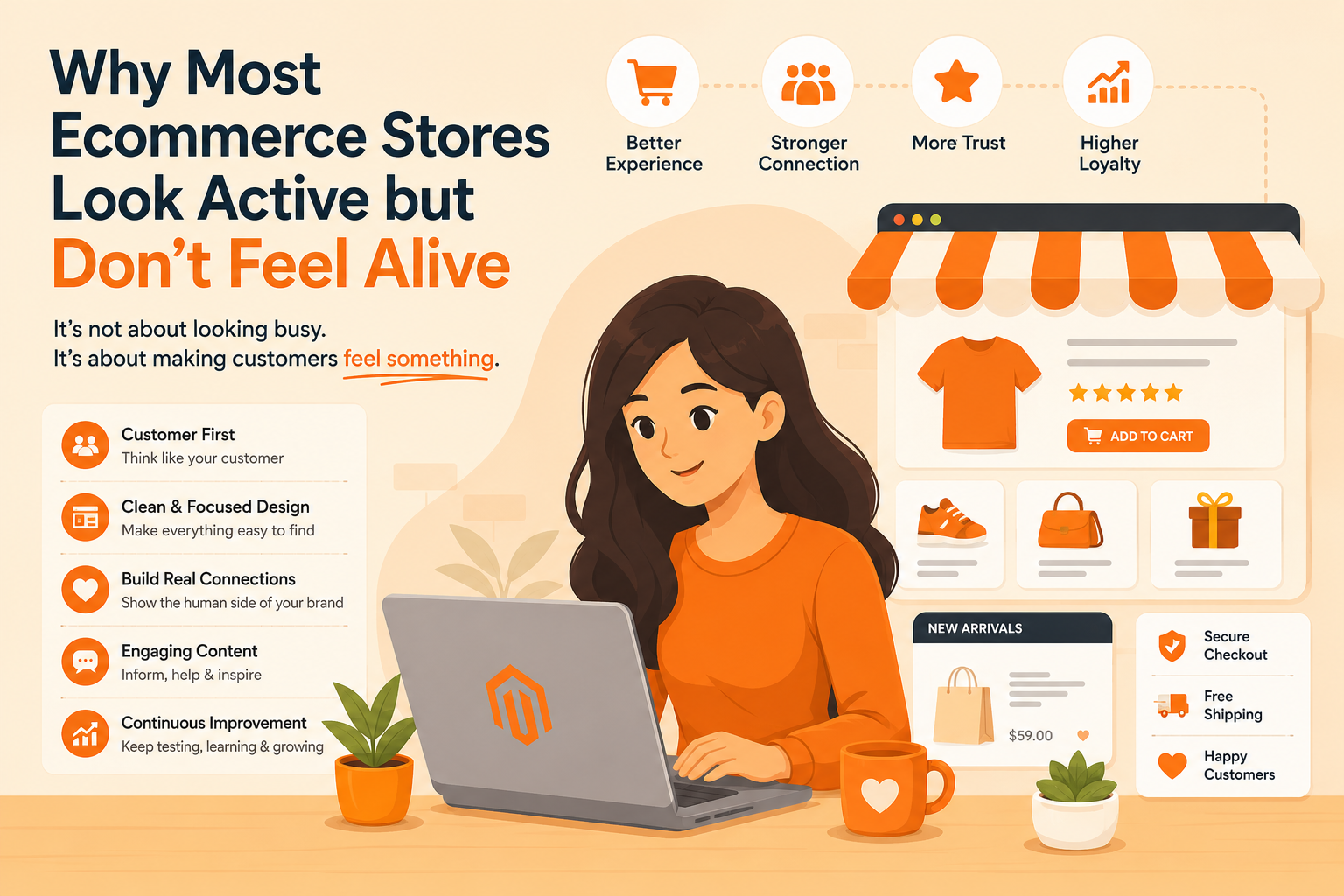
That’s the difference between a store that looks active and one that feels alive.
Many ecommerce businesses spend enormous amounts of time driving traffic, adding products, running promotions, and tweaking conversion rates. Those efforts matter, but activity alone doesn’t create a memorable shopping experience. Customers aren’t just evaluating your products—they’re forming an opinion about your brand every second they’re on your website.
If every interaction feels mechanical, your store becomes forgettable. If every interaction feels intentional, visitors begin to trust you, engage with your content, and eventually become loyal customers.
So why do so many ecommerce stores struggle to create that feeling? The answer usually isn’t a lack of effort. It’s that they’re optimizing for visibility instead of connection.
A Busy Homepage Isn’t the Same as a Welcoming Store
Many ecommerce stores try to impress visitors within the first few seconds. The result is often a homepage overflowing with announcements, promotional banners, featured products, seasonal collections, pop-ups, trust badges, newsletter forms, and limited-time offers.
The intention is understandable. Every element is meant to increase conversions.
Ironically, when everything demands attention, nothing truly stands out.
Instead of guiding visitors naturally through the shopping journey, the homepage becomes a competition between competing messages. Customers don’t know where to focus, so they often leave before exploring further.
Good design isn’t about adding more elements. It’s about helping people make decisions without feeling overwhelmed.
Think about walking into two physical stores.
The first has products stacked everywhere, loud promotional signs hanging from every aisle, and salespeople trying to grab your attention every few steps.
The second is thoughtfully arranged. Products are easy to discover, the layout feels calm, and you instinctively know where to go next.
Both stores may carry similar products, but one creates confidence while the other creates stress.
Your ecommerce store works the same way.
Whitespace isn’t wasted space. Clear navigation isn’t boring. Simplicity isn’t a lack of creativity. These elements quietly shape how customers feel while they browse.
When people don’t have to fight through clutter, they spend more time discovering your products instead of trying to understand your website.
Customers Don’t Connect With Products First—They Connect With People
Thousands of online stores sell products that look remarkably similar.
What separates memorable brands isn’t always the product itself. It’s the personality behind it.
Unfortunately, many ecommerce websites remove every trace of humanity from their communication. Product descriptions sound like they were copied from a manufacturer. The “About Us” page is filled with generic promises. Every image looks like it came from the same stock photography library.
Nothing feels personal.
Customers can sense that immediately.
People naturally trust brands that feel authentic because authenticity reduces uncertainty. When shoppers can understand who they’re buying from, what the brand believes in, and why it exists, purchasing feels less risky.
That doesn’t mean every brand needs a dramatic founder story.
Sometimes authenticity is much simpler.
It might be explaining why you chose certain materials instead of cheaper alternatives.
It might be introducing the people who pack every order.
It could be showing how your products are designed, tested, or improved based on customer feedback.
These small moments remind shoppers that there are real people behind the website.
The goal isn’t to sound perfect.
The goal is to sound human.
When your brand has a recognizable voice, customers begin remembering you for more than your products. They remember how your business made them feel.
The Most Memorable Stores Don’t Feel Like Catalogs
Many ecommerce stores unintentionally resemble digital warehouses.
There are hundreds of products, endless categories, and filters for every possible variation. Everything is organized, but very little is inspiring.
Customers aren’t simply looking for products. They’re looking for confidence that they’re making the right choice.
Imagine visiting a skincare website.
One store displays thirty moisturizers with nearly identical descriptions.
Another helps you understand your skin type, explains why certain ingredients matter, recommends a routine, and answers common questions before you even ask them.
Both stores sell moisturizer.
Only one creates value before asking for the sale.
This is where many ecommerce businesses miss an opportunity.
A website shouldn’t only answer, “What do we sell?”
It should also answer:
* Why does this product matter?
* Who is it best suited for?
* What problem does it solve?
* How will life improve after using it?
When your store educates customers instead of simply listing products, shopping becomes less transactional and more reassuring.
People remember businesses that help them make better decisions.
Every Interaction Should Feel Like a Conversation
One of the biggest reasons online stores feel lifeless is that communication only flows in one direction.
The business talks.
The customer listens.
Product pages describe features. Promotional banners announce discounts. Email sign-up forms ask for information.
But customers rarely feel invited into a conversation.
The most engaging ecommerce brands create opportunities for interaction throughout the buying journey.
Customer reviews don’t just provide social proof—they allow shoppers to hear real experiences from people like them.
Frequently asked questions eliminate uncertainty before it becomes hesitation.
Live chat reassures visitors that help is available when they need it.
Even something as simple as thoughtful confirmation emails can transform an ordinary purchase into the beginning of a relationship.
These interactions may seem small individually, but together they create something much more valuable: trust.
Customers are far more likely to return to stores where they feel acknowledged rather than processed.
The difference is subtle but incredibly powerful.
A website that constantly talks at customers feels automated.
A website that listens, responds, and guides them feels alive.
Personalization Is More Than a Marketing Tactic—It’s a Sign of Attention
Imagine walking into your favorite local store, and the owner remembers what you bought last time. They recommend something new based on your preferences instead of showing you every product on the shelf.
That’s what great personalization feels like.
Too many ecommerce stores still deliver the same experience to every visitor. A first-time shopper sees the same homepage as a returning customer. Someone interested in skincare is shown haircare promotions. A customer who abandoned a cart receives the same generic newsletter as everyone else.
It’s efficient—but it isn’t personal.
Modern shoppers have grown accustomed to experiences that feel tailored to them. They don’t necessarily expect brands to know everything about them, but they do appreciate when a store remembers their interests and removes unnecessary friction from the buying journey.
Personalization doesn’t have to be complicated. It can be as simple as recommending products based on browsing history, highlighting recently viewed items, remembering a customer’s preferred size, or suggesting complementary products that genuinely make sense.
The goal isn’t to collect more data. It’s to use the information you already have to make shopping easier.
When customers feel understood instead of targeted, they’re far more likely to trust your recommendations—and trust is often the deciding factor between browsing and buying.
Speed Isn’t Just a Technical Metric—It’s Part of the Experience
Website performance is usually discussed in terms of page speed scores, Core Web Vitals, and technical optimization.
Customers don’t think about any of those things.
They simply notice whether your website feels smooth or frustrating.
Every extra second a page takes to load creates a tiny moment of doubt. Did the page freeze? Is something broken? Should I go back and try another store instead?
Those moments add up quickly.
A beautiful website loses much of its impact if visitors are constantly waiting for images to load or buttons to respond. Likewise, an excellent product page can’t persuade someone who has already decided the shopping experience feels unreliable.
Speed communicates professionalism.
A fast website quietly tells customers that your business is organized, dependable, and respectful of their time. A slow website sends the opposite message, even if the products themselves are exceptional.
Improving performance isn’t just about search rankings or conversion rates. It’s about protecting the experience you’ve worked so hard to create.
Living Stores Never Feel Finished
Some ecommerce websites look exactly the same every time you visit.
The same homepage.
The same featured products.
The same banners.
The same messaging.
Weeks turn into months, and nothing changes.
Eventually, customers stop expecting anything new.
The best ecommerce brands treat their websites as living spaces rather than static catalogs. There’s always something worth discovering—a seasonal collection, a helpful article, customer stories, behind-the-scenes content, or new ways to explore existing products.
Fresh content doesn’t exist simply to fill space or improve SEO.
It gives people a reason to come back.
Think about your favorite brands. Chances are, they aren’t constantly shouting about discounts. Instead, they’re sharing ideas, introducing new collections, answering customer questions, and creating experiences that extend beyond the checkout page.
Every update reinforces the message that the brand is active, evolving, and paying attention.
That’s what makes a store feel alive.
The Biggest Mistake? Optimizing for Conversions Instead of Relationships
Many ecommerce businesses become obsessed with increasing conversion rates.
Every decision is measured by one question:
Will this generate more sales?
It’s a reasonable goal—but it can lead to short-term thinking.
Pop-ups appear within seconds of landing on the site. Countdown timers create artificial urgency. Trust badges multiply across every page. Discount offers become impossible to ignore.
Individually, these tactics can work.
Together, they often create an experience that feels more like a sales funnel than a brand.
Customers today are remarkably good at recognizing when they’re being pushed toward a purchase.
Ironically, the harder a website tries to convince people to buy, the less trustworthy it can feel.
The brands people return to don’t just optimize for transactions.
They optimize for relationships.
They answer questions before customers ask.
They remove uncertainty instead of creating pressure.
They focus on helping people make confident decisions rather than rushed ones.
Sales become a natural outcome of trust—not the result of constant persuasion.
That’s the difference between brands that struggle for every conversion and brands that build communities around what they sell.
A Store Feels Alive When Every Detail Has Purpose
When people say a website “feels alive,” they’re rarely talking about animations or fancy design effects.
They’re describing something much harder to define.
It’s the feeling that someone genuinely thought about the experience from the customer’s perspective.
The navigation makes sense.
The writing sounds human.
The photography feels authentic.
The recommendations are helpful.
The checkout process is effortless.
Nothing feels accidental.
Every small detail works together to create confidence.
Customers may never consciously notice these decisions, but they’ll remember how your store made them feel.
And feelings are surprisingly powerful in ecommerce.
People forget product specifications.
They forget discount percentages.
They forget promotional banners.
But they remember the brands that made shopping easy, enjoyable, and trustworthy.
Conclusion: Activity Gets Attention. Life Builds Loyalty.
An ecommerce store can publish new products every week, run constant promotions, send daily emails, and fill every page with marketing messages.
From the outside, it looks busy.
But being busy isn’t the same as being memorable.
The stores that stand out aren’t always the ones with the biggest catalogs or the loudest campaigns. They’re the ones that create experiences people genuinely enjoy. They simplify instead of overwhelm. They communicate instead of advertise. They guide instead of pressure.
Most importantly, they remember that every visitor is a person—not just another conversion opportunity.
Creating a store that feels alive doesn’t require flashy design trends or endless new features.
It requires intention.
Every page should answer a customer’s questions.
Every interaction should build trust.
Every piece of content should reinforce who your brand is and why it deserves attention.
Because in today’s competitive ecommerce landscape, products can be copied, prices can be matched, and marketing tactics can be imitated.
A memorable customer experience can’t.
That’s what transforms first-time visitors into loyal customers—and ordinary ecommerce stores into brands people genuinely want to come back to.