Most ecommerce stores are built with one clear goal: generating sales. From countdown timers to bold discounts and endless promotional banners, it’s easy to tell when a website is focused on converting visitors as quickly as possible. While these tactics can attract attention, they don’t always create a shopping experience that people enjoy.
Today’s online shoppers have become more experienced and selective. They can quickly recognise the difference between a store that simply pushes products and one that genuinely understands their needs, answers their questions, and respects their buying journey. Rather than feeling pressured, they want to feel informed, supported, and confident before making a purchase.
This is where people-first design stands apart from sales-only design. Both approaches aim to increase revenue, but the path they take is very different. One focuses on building trust and creating a positive experience, while the other prioritises immediate conversions above everything else.
The Difference Between Selling and Serving
A sales-only ecommerce store often feels busy from the moment someone lands on the homepage. Visitors are greeted with multiple pop-ups, flashing discounts, countdown timers, and banners competing for attention. Product categories can feel crowded, and the messaging often sounds generic, focusing only on convincing customers to buy now.
A people-first store creates a very different impression. Navigation is straightforward, information is organised logically, and shoppers are guided naturally through the buying process. Instead of overwhelming visitors with promotions, it provides the information they need at the right time.
Both types of stores ultimately want the same outcome—a completed purchase. The difference is that a people-first store earns that purchase through clarity, helpful guidance, and respect for the customer’s decision-making process rather than relying on pressure.
Small Signals That Make a Store Feel Human
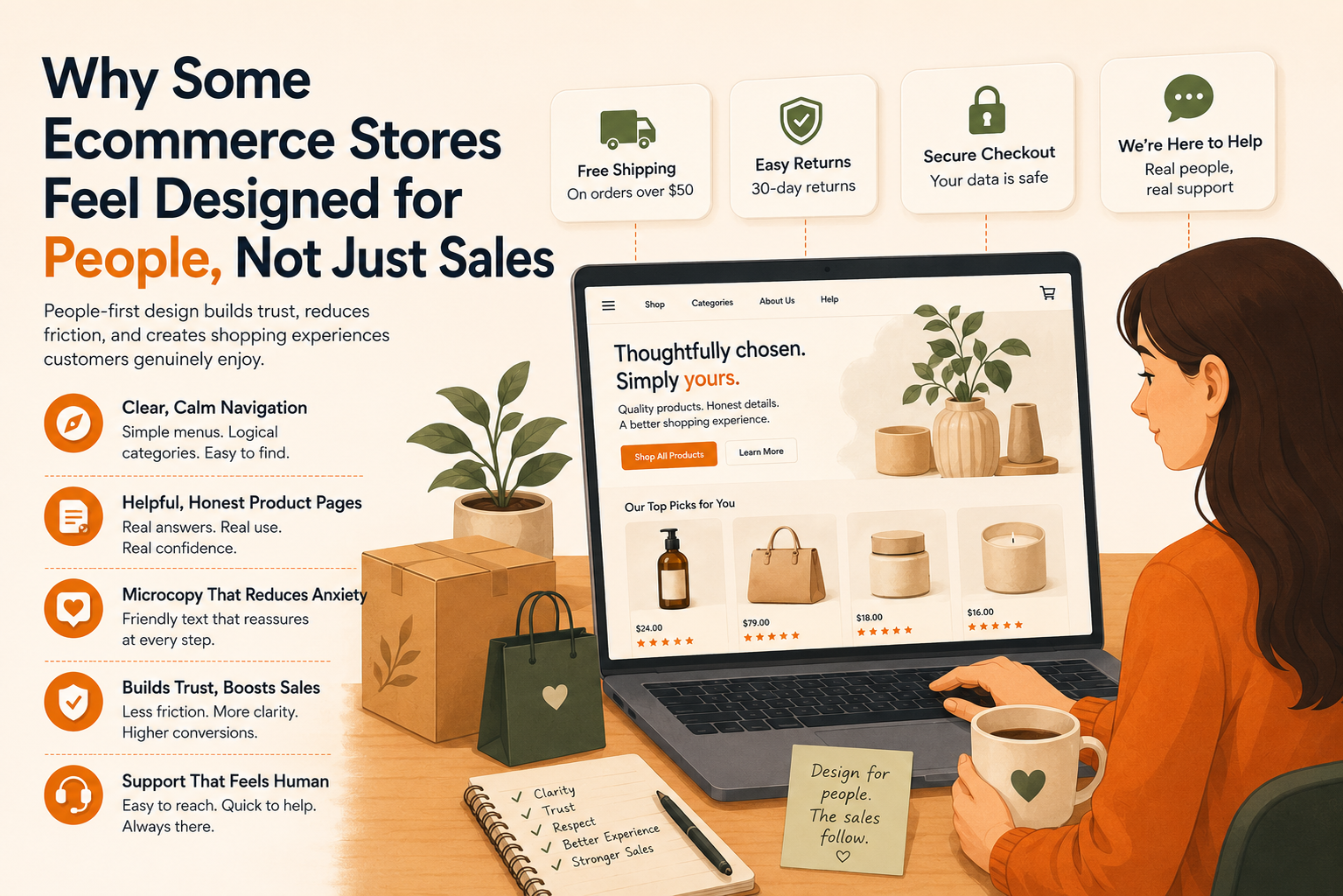
Clear, Calm Navigation
Simple navigation helps customers find what they need without frustration. Well-organised menus, sensible categories, and an uncluttered layout make browsing feel natural instead of confusing.
Rather than forcing shoppers to search through endless options, people-first stores organise products in ways that match how customers actually think and shop.
Helpful, Honest Product Pages
Great product pages answer real customer questions before they become objections.
Instead of repeating manufacturer specifications or marketing phrases, they explain how the product works, who it’s suitable for, and what buyers should realistically expect.
Images also play an important role. Alongside professional product photography, showing products in real-life situations helps customers better understand size, usage, and quality.
Microcopy That Reduces Anxiety
The small pieces of text surrounding the buying process often have the biggest impact.
Friendly messages about shipping times, return policies, payment security, or delivery expectations can reduce uncertainty and make customers feel more comfortable.
Instead of sounding like legal documents, these messages feel conversational and reassuring, making the entire experience more human.
Why People-First Design Still Sells Better
Designing for people doesn’t mean ignoring sales. In fact, it often leads to stronger business results.
When customers can easily find products, understand important information, and trust what they’re reading, there are fewer reasons to abandon their purchase. Clear layouts reduce friction, honest product descriptions build confidence, and transparent policies remove uncertainty.
Shoppers are naturally more likely to complete checkout when they feel understood rather than pressured. A calm, trustworthy shopping experience encourages not only higher conversion rates but also repeat purchases, positive reviews, and long-term customer loyalty.
Ultimately, people-first design supports sales by making buying easier instead of making selling louder.
Where Ecommerceally’s Perspective Fits In
At Ecommerceally, people-first ecommerce extends beyond website design. The team works with brands on the operational and content side of ecommerce, helping ensure every customer interaction feels clear and consistent.
Accurate product listings, informative descriptions, responsive customer support, and well-managed marketplace presence all contribute to how trustworthy and human a business feels. Smooth operations behind the scenes often create a better experience for customers long before they reach the checkout page.
Signs Your Store Is Designed for Sales, Not People
If you’re unsure where your ecommerce store stands, look for these common warning signs:
- Overwhelming pop-ups, countdown timers, and constant urgency messages.
- Product information that assumes customers already know important details.
- Shipping, return, or refund policies that are difficult to find or understand.
- A checkout process filled with unnecessary steps or confusing instructions.
- Visual clutter that makes browsing feel stressful rather than enjoyable.
These issues don’t just affect user experience—they can reduce trust and increase cart abandonment.
How to Make Your Store Feel More Designed for People
Improving the customer experience doesn’t always require a complete redesign. Small, thoughtful changes can make a significant difference.
- Simplify navigation and remove unnecessary menu options.
- Rewrite product descriptions to answer genuine customer questions.
- Add clear, friendly information about shipping, returns, guarantees, and delivery expectations.
- Reduce visual clutter, excessive promotions, and urgency-based messaging.
- Make customer support easy to locate through visible contact options, FAQs, and live assistance where appropriate.
By focusing on clarity instead of complexity, businesses create shopping experiences that customers genuinely appreciate.
FAQs
1. What does it mean for an ecommerce store to be designed for people?
A people-first ecommerce store is designed around how customers naturally browse, compare, and make purchasing decisions. Instead of pushing immediate sales, it focuses on creating a clear, helpful, and trustworthy shopping experience.
2. Why does people-first design matter for online sales?
People-first design builds confidence by reducing confusion and making important information easy to find. When customers feel informed and respected, they’re more likely to complete their purchase and return in the future.
3. How can an ecommerce brand start shifting from sales-only to people-first design?
Brands can begin by simplifying navigation, improving product content, reducing unnecessary urgency, making policies easier to understand, and ensuring support is easy to access. Small improvements that reduce friction often lead to better customer experiences and stronger long-term sales.