When customers shop online, they cannot touch or inspect a product before purchasing. Their first physical interaction with your brand often happens when the package arrives at their door.
This moment—the unboxing experience—can shape how customers perceive your product, your brand, and whether they want to buy from you again. Thoughtful packaging creates excitement and reinforces quality, while poor packaging can create doubt even before the product is used.
Packaging is more than a protective layer. It is a powerful tool for building trust, communicating brand values, and influencing customer satisfaction.
What Is the Unboxing Experience?
The unboxing experience refers to the complete sensory and emotional journey a customer goes through when receiving, opening, and discovering an ecommerce order.
It includes:
-
The outer shipping box or mailer.
-
The interior presentation and protective materials.
-
The way the product is arranged inside.
-
Any inserts such as thank-you cards, instructions, or promotional materials.
-
The product reveal.
-
The textures, colors, and overall design.
-
Any personalized touches.
This experience spans from the moment the customer sees the package to the final interaction with the product.
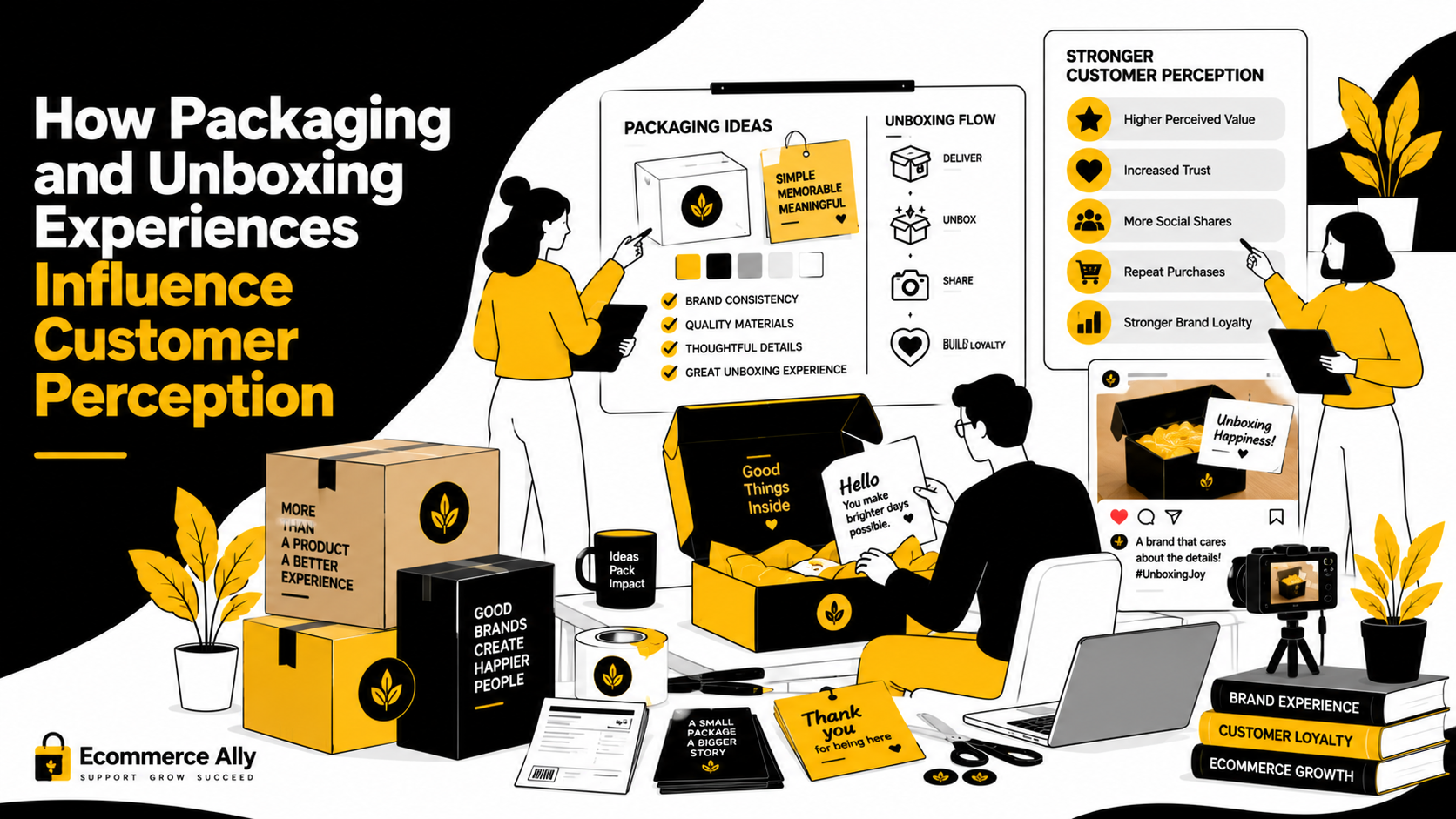
A memorable unboxing experience uses branded packaging, attractive presentation, and personalized touches to create excitement and reinforce brand identity.
Why Packaging Matters for Customer Perception
It creates the first physical impression
Packaging is often the first tangible touchpoint between your brand and the customer. When a customer opens a box, they assess quality within seconds.
Professional packaging signals a professional business. Flimsy boxes, loose items, and minimal protection can signal carelessness. That impression directly impacts how customers rate your product and whether they buy from you again.
Quality packaging signals professionalism and care, while poor packaging creates immediate negative impressions, drives returns, and generates support tickets.
It influences perceived product quality
Customers link packaging quality to product quality. If your packaging looks cheap, they may assume the product is cheap, even if it is exceptional.
This perception alone can trigger negative reviews before customers even use the product.
Custom packaging that protects the product during transit and storage demonstrates trustworthiness. Durable, visually appealing materials elevate the product’s presentation and protect it in transit.
It strengthens brand identity
Every design element, from color palette to typography, strengthens brand identity. When packaging mirrors other brand touchpoints, it builds recognition and continuity, turning each delivery into a consistent expression of brand values.
Consistent, high-quality packaging reinforces your brand identity and builds trust. From logo placement and color schemes to texture and design, every detail communicates your company’s values and professionalism.
It affects customer loyalty and repeat purchases
Research shows that 52% of customers factor in packaging quality when deciding to shop with a brand again. Packaging directly impacts repeat purchase likelihood and customer lifetime value.
Studies consistently show that anything from 40% to 60% of consumers say thoughtful packaging influences whether they will buy again.
When an order arrives in branded packaging, 55% of customers say they are more likely to come back to the brand’s website and buy again.
Key Elements of a Strong Unboxing Experience
Branded outer packaging
The outer box or mailer is the first thing customers see. Branded packaging helps your package stand out and creates a sense of anticipation.
Key considerations include:
-
Logo placement.
-
Brand colors.
-
Consistent typography.
-
Professional design.
-
Durable materials.
Even simple touches such as a branded sticker or custom tape can improve the experience.
Thoughtful interior presentation
The inside of the package should reflect the same attention to detail as the exterior. This includes:
-
Clean and organized product arrangement.
-
Appropriate protective materials.
-
Branded tissue paper or inserts.
-
Minimal excess packaging where possible.
-
Clear communication of sustainability choices.
Simplify opening and remove any friction. Add one sensory or personal touch to make the experience memorable.
Personalized touches
Personalization helps customers feel valued. Consider including:
-
Handwritten thank-you notes.
-
Personalized messages.
-
Custom inserts with the customer’s name.
-
Small free samples or gifts.
-
QR codes linking to helpful content.
These touches show that your brand cares about the little things, which often translate into big impact.
Clear and useful inserts
Inserts should provide value without overwhelming the customer. Useful inserts may include:
-
Thank-you cards.
-
Product usage instructions.
-
Care guides.
-
Information about your brand story.
-
Details about sustainability efforts.
-
Social media handles or hashtags.
-
Return or exchange information.
Avoid excessive promotional materials that may feel like clutter.
Easy-to-open design
Customers appreciate packaging that is easy to open without damaging the product. Consider:
-
Perforated opening lines.
-
Pull tabs.
-
Magnetic closures.
-
Minimal tape usage.
-
Clear opening instructions where necessary.
Frustrating packaging can create a negative experience before the customer even sees the product.
Sustainability considerations
Many customers value eco-friendly packaging. Options include:
-
Recyclable materials.
-
Biodegradable protective fillers.
-
Minimal packaging design.
-
Clear communication about how to dispose of packaging.
-
Reusable packaging where possible.
Packaging that is easy to open, eco-friendly, and visually appealing shows you care about customer convenience and the environment. This thoughtful approach boosts customer satisfaction and encourages repeat purchases.
How Packaging Influences Customer Behavior
It encourages social sharing
Memorable unboxing experiences are often shared on social media. Customers may post photos or videos of their unboxing, creating organic promotion for your brand.
Companies now invest heavily in creating memorable unboxing experiences that customers want to document and share.
It reduces returns
A well-structured unboxing ensures the product looks premium and intact, reducing unnecessary “change of mind” returns. Packaging goes beyond protection—it enhances the customer experience and reduces support issues.
When customers receive a thoughtfully packaged item, it immediately sets a positive tone. High-quality materials, personalized inserts, and organized presentation make the customer feel valued.
It builds emotional connection
The unboxing experience is your brand’s audition for loyalty. The box becomes a baton passed from brand to customer, carrying excitement, trust, and, if done well, the key to customer retention.
Unboxing experiences drive customer loyalty by making recipients feel valued and emotionally connected to the brand, encouraging repeat purchases.
It differentiates your brand
In a crowded ecommerce market, packaging can be a key differentiator. When multiple brands sell similar products, the unboxing experience can help your brand stand out.
The unboxing experience is a crucial touchpoint in the ecommerce customer journey, as it sets the tone for how a customer perceives your brand and product upon arrival.
Common Packaging Mistakes to Avoid
-
Using flimsy or damaged boxes.
-
Allowing products to move loosely inside the package.
-
Excessive packaging that creates waste.
-
Difficult-to-open designs.
-
Inconsistent branding across packaging elements.
-
Missing or unclear product information.
-
No protection for fragile items.
-
Generic packaging that looks identical to competitors.
-
Failing to communicate sustainability efforts.
-
Ignoring the interior presentation.
These mistakes can create negative impressions and reduce customer satisfaction.
How to Improve Your Unboxing Experience
Start with your brand identity
Your packaging should reflect your brand’s personality and values. A luxury brand may use premium materials and minimal design, while a playful brand may use bright colors and fun inserts.
Define your brand voice, color palette, typography, and visual style before designing packaging.
Test your packaging
Before launching, test your packaging with a small group of customers or team members. Ask them to:
-
Open the package.
-
Evaluate the presentation.
-
Share their first impressions.
-
Identify any issues.
-
Suggest improvements.
Use this feedback to refine your packaging before scaling.
Keep it consistent
Ensure your packaging remains consistent across all orders. Customers should receive the same quality and experience whether they order once or multiple times.
Uniform design language across product lines reassures customers that they are buying from a reliable brand family.
Balance quality and cost
While premium packaging is desirable, it must be sustainable for your business. Find a balance between quality materials and reasonable costs.
Even modest items can feel premium when presented with care, increasing perceived value and positively influencing customer satisfaction and repurchase intent.
Measure the impact
Track metrics such as:
-
Customer reviews mentioning packaging.
-
Social media shares of unboxing content.
-
Return rates.
-
Repeat purchase rates.
-
Customer support tickets related to packaging.
-
Survey responses about unboxing experience.
Use this data to continuously improve your packaging strategy.
How EcommerceAlly Can Help
Creating a strong unboxing experience requires coordination between branding, product content, operations, and customer support. EcommerceAlly can support ecommerce businesses with:
-
Developing consistent brand guidelines for packaging.
-
Writing clear product and packaging information.
-
Creating customer-friendly inserts and instructions.
-
Managing product listings with accurate details.
-
Supporting ecommerce virtual assistant tasks related to customer inquiries.
-
Reviewing website content for clarity and consistency.
Thoughtful packaging creates anticipation and excitement, making customers feel valued and enhancing their overall satisfaction. A memorable unboxing can turn first-time buyers into loyal advocates who share their experience with others.
Final Thoughts
Packaging and unboxing experiences are more than operational details. They are powerful tools for shaping customer perception, building trust, and encouraging repeat purchases.
When customers receive a thoughtfully packaged item, it sets a positive tone for their entire experience with your brand. High-quality materials, personalized touches, and organized presentation show that your business cares about quality and customer satisfaction.
By investing in branded packaging, clear inserts, easy-to-open designs, and sustainable materials, ecommerce businesses can create memorable unboxing experiences that customers want to share and return to.