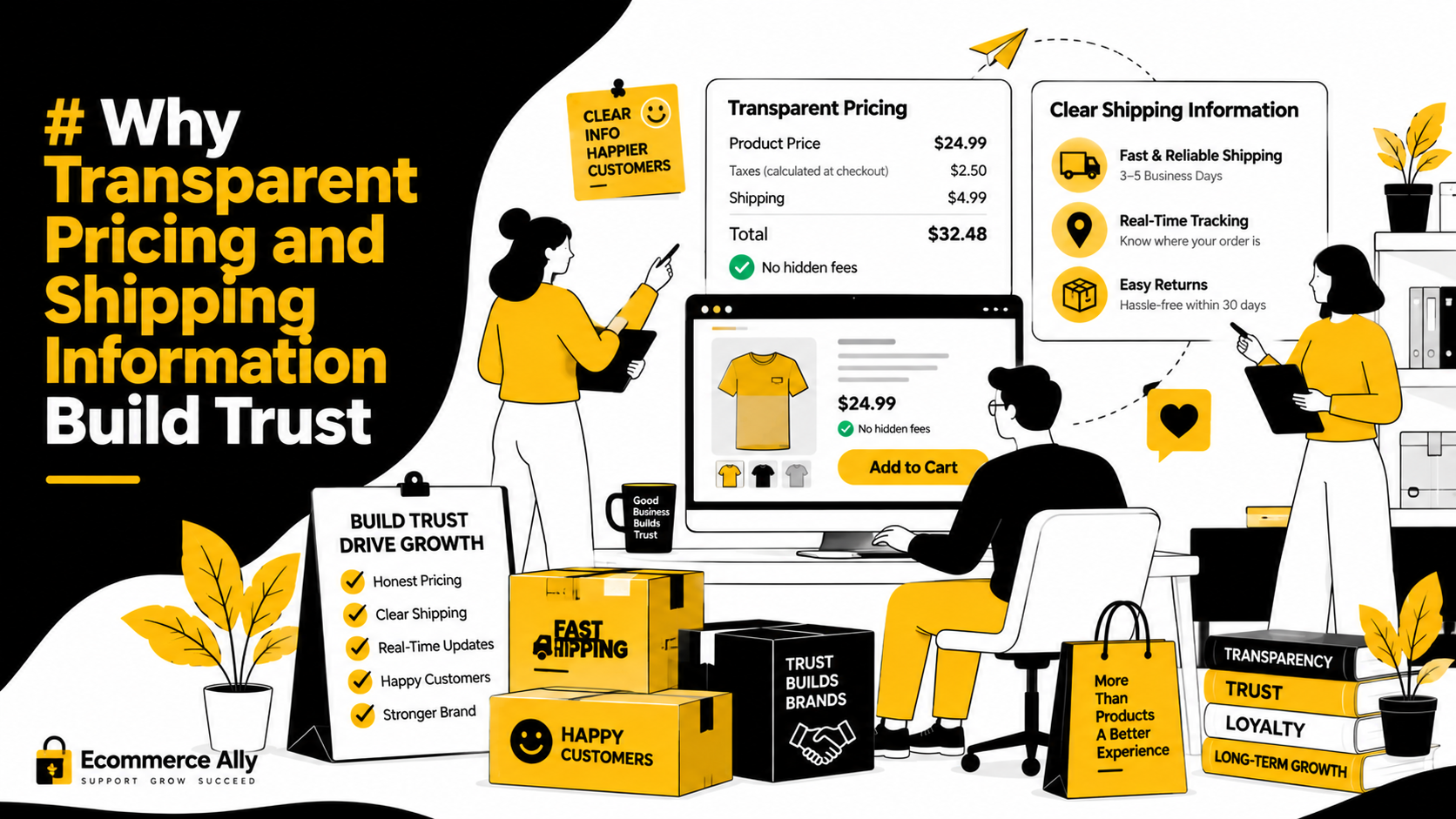
When customers shop online, they cannot speak directly to a salesperson or inspect the product before purchasing. Instead, they rely on the information provided on the website to decide whether to complete an order.
Two of the most important pieces of information are pricing and shipping details. When these are clear, accurate, and easy to find, customers feel more confident. When they are hidden, confusing, or change unexpectedly, customers may lose trust and abandon their carts.
Transparent pricing and shipping information help set realistic expectations, reduce frustration, and create a smoother shopping experience.
What Is Transparent Pricing?
Transparent pricing means clearly communicating all costs related to a product before the customer completes the purchase.
This includes:
-
Product price.
-
Shipping charges.
-
Taxes.
-
Additional fees.
-
Discounts and promotions.
-
Return or restocking fees where applicable.
-
Any conditions that affect the final price.
Transparent pricing does not mean every product must be the cheapest option. It means customers understand what they are paying for and why.
Why Pricing Transparency Matters
It reduces checkout surprises
One of the most common reasons for cart abandonment is unexpected costs appearing at checkout. A customer may add a product to their cart, proceed to payment, and then see additional charges they did not anticipate.
When the total cost is displayed early in the shopping journey, customers can make informed decisions. Showing all relevant costs as early as possible helps reduce surprises during checkout.
It builds customer confidence
When pricing is clear and consistent, customers perceive the business as honest and reliable. They feel more comfortable completing a purchase because they know exactly what to expect.
Price transparency helps build trust, reduces customer frustration, and supports long-term customer relationships.
It supports better comparisons
Customers often compare products across multiple websites before purchasing. When prices are clearly displayed, including shipping and taxes, customers can make fair comparisons without guessing the final cost.
This is especially important when selling across multiple channels such as your own website, Amazon, Etsy, Shopify, or eBay. Customers expect consistent pricing regardless of where they purchase.
It reduces customer service questions
When pricing information is unclear, customers may contact support to ask about:
-
Final product cost.
-
Shipping charges.
-
Discount eligibility.
-
Taxes.
-
Additional fees.
Clear pricing reduces these repetitive questions and allows your team to focus on more complex issues.
What Is Transparent Shipping Information?
Transparent shipping information means providing clear and accurate details about how orders will be delivered.
This includes:
-
Available shipping methods.
-
Shipping costs.
-
Estimated delivery times.
-
Processing times.
-
Shipping destinations.
-
Any restrictions or special conditions.
-
Tracking information.
-
Return shipping details where applicable.
A detailed shipping policy signals that you take fulfillment seriously and have systems in place to handle orders efficiently.
Why Shipping Transparency Matters
It sets realistic delivery expectations
Customers want to know when they can expect their order. Providing realistic delivery estimates helps them plan accordingly.
When delivery times are unclear or overly optimistic, customers may become frustrated if their order arrives later than expected. Clear shipping information helps align customer expectations with actual delivery performance.
It reduces order anxiety
Waiting for an order can create uncertainty. When customers know their shipping method, tracking options, and estimated delivery window, they feel more in control.
A strong post-purchase experience improves loyalty and reduces support costs. Offering multiple delivery options and clear tracking information helps customers feel more confident about their purchase.
It decreases shipping-related complaints
When shipping costs or delivery times are hidden until checkout, customers may feel misled. This can result in complaints, cancellations, or negative reviews.
Displaying shipping costs at the shopping cart stage, rather than after customers commit, helps prevent this issue. Better yet, offering free shipping above a certain order value and stating this clearly can improve the customer experience.
It supports better planning for your operations
When your shipping policy is clear, your team can manage orders more effectively. Everyone understands the promised delivery timelines, available carriers, and shipping conditions.
This consistency helps prevent misunderstandings between your operations team, customer support, and customers.
Best Practices for Transparent Pricing
Show total costs early
Display all relevant costs as early as possible in the buying journey. This includes product price, shipping, taxes, and any additional fees.
Avoid adding significant charges only at the final checkout step. Customers should be able to see the approximate total cost before entering payment details.
Ensure pricing consistency across channels
If you sell on multiple platforms, maintain consistent pricing where possible. Customers may compare your website with your Amazon, Etsy, or eBay listings.
Inconsistent pricing without a clear reason can create confusion and reduce trust.
Clearly explain promotions and discounts
When running promotions, explain the conditions in simple language. For example:
-
Minimum order value for free shipping.
-
Discount percentages.
-
Validity period.
-
Eligible products.
-
Any exclusions.
Promotional conditions should be simple, visible, and easy to understand.
Use simple language
Avoid technical terms or confusing jargon when explaining pricing. Use clear and straightforward language that customers can easily understand.
For example, instead of saying “applicable surcharges may apply,” specify the exact charges and when they apply.
Make pricing information easy to find
Place pricing and additional cost information in obvious locations, such as:
-
Product pages.
-
Shopping cart.
-
Checkout page.
-
Shipping policy page.
-
FAQ section.
Customers should not need to search extensively to find basic pricing information.
Best Practices for Transparent Shipping Information
List every shipping option clearly
Create a clear table or list that includes:
-
Shipping method name (Standard, Expedited, Express).
-
Carrier used (USPS, UPS, FedEx, DHL).
-
Estimated delivery timeframe.
-
Cost or conditions for free shipping.
This helps customers choose the option that best fits their needs.
Provide realistic delivery estimates
Base your delivery estimates on actual processing times and carrier performance. Avoid promising faster delivery than you can reliably provide.
If there are predictable seasonal delays, communicate them in advance.
Link your shipping policy in key locations
Customers expect to find shipping information in standard placements. Link your shipping policy from:
-
Website footer.
-
Main navigation menu.
-
Product pages.
-
Shopping cart page.
-
Checkout page.
This ensures customers can access shipping details at every stage of their journey.
Mention free shipping prominently
If you offer free shipping, mention it in visible areas such as:
-
Website header.
-
Product pages.
-
Shopping cart.
-
Checkout page.
Clearly state any conditions, such as minimum order value or eligible regions.
Keep your shipping policy updated
Your shipping policy should reflect your current operations. Update it when you:
-
Add or remove shipping carriers.
-
Change your free shipping threshold.
-
Expand or limit shipping destinations.
-
Experience predictable seasonal delays.
-
Adjust processing times.
Review your policy regularly to ensure it remains accurate.
Use plain language
Write your shipping policy in the same voice you use throughout your website. Avoid legal jargon that may confuse customers.
Explain handling times, transit times, and any special conditions in simple terms.
How Transparent Information Supports Customer Trust
Clear pricing and shipping details help customers feel informed and respected. They can make purchasing decisions without worrying about hidden charges or unexpected delays.
Transparent policies, including return and shipping procedures, help shoppers feel fully informed before finalizing orders.
When customers trust your pricing and shipping information, they are more likely to:
-
Complete their purchase.
-
Return for future orders.
-
Recommend your store to others.
-
Leave positive reviews.
-
Contact support less frequently for basic questions.
Detailed, accurate information about products and delivery time helps ensure customers’ expectations align with the products they receive.
Common Mistakes to Avoid
-
Hiding shipping costs until the final checkout step.
-
Displaying different prices on different platforms without explanation.
-
Using vague phrases such as “shipping calculated at checkout” without estimates.
-
Promising unrealistic delivery times.
-
Failing to update shipping policies when operations change.
-
Not mentioning additional fees such as customs, duties, or remote area charges where applicable.
-
Using complicated language that customers cannot easily understand.
These mistakes can create frustration, increase cart abandonment, and damage customer trust.
How EcommerceAlly Can Help
Creating clear pricing and shipping information requires coordination between product content, operations, and customer support. EcommerceAlly can support ecommerce businesses with:
-
Writing clear product descriptions and pricing details.
-
Creating customer-friendly shipping and return policies.
-
Developing consistent brand messaging across platforms.
-
Managing product listings with accurate information.
-
Supporting ecommerce virtual assistant tasks related to customer inquiries.
-
Reviewing website content for clarity and consistency.
Transparent pricing and shipping information are essential parts of a trustworthy ecommerce experience. With the right content and clear policies, online sellers can create a smoother shopping journey and build stronger customer relationships.
Final Thoughts
Transparent pricing and shipping information are not just operational details. They are important elements of customer trust and satisfaction.
When customers understand what they are paying and when they can expect their order, they feel more confident completing a purchase. Clear information reduces frustration, supports better decision-making, and creates a more positive overall experience.
By displaying total costs early, maintaining consistent pricing, explaining promotions clearly, and providing accurate shipping details, ecommerce businesses can build stronger trust with their customers.