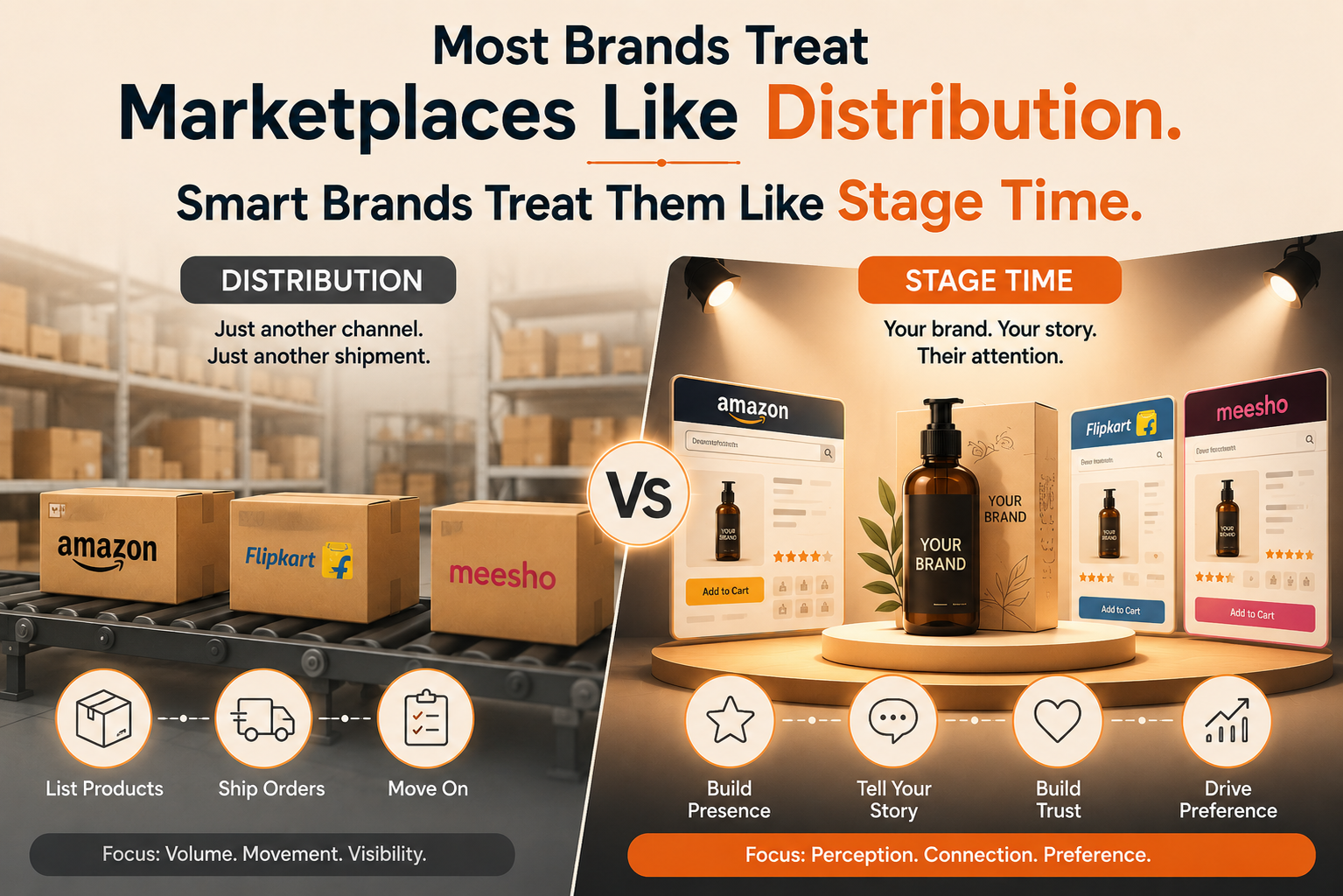
For many ecommerce businesses, marketplaces are viewed as one thing: another place to sell products.
The goal is simple—upload listings, make products available, and reach more customers. Once the products are live, the job feels complete.
But the smartest brands see marketplaces differently.
They don’t just see Amazon, Etsy, Walmart, or other platforms as distribution channels. They see them as stages where thousands—sometimes millions—of shoppers are forming opinions about their business every single day.
Every product listing, image, description, review, and customer interaction becomes part of the performance.
The difference is significant. Distribution helps customers find your products. Stage time helps customers remember your brand.
What Distribution Thinking Misses
Getting your products listed is important, but it’s only the starting point.
A distribution-first mindset focuses on availability. The objective is simply to ensure products appear in search results and are ready for purchase.
What this approach often overlooks is how customers actually make buying decisions.
They don’t judge your brand based on the fact that your product exists on a marketplace. They judge it through:
-the quality of your images
-the clarity of your product descriptions
-the professionalism of your branding
-the consistency of your messaging
-and the confidence your listing inspires
Two sellers can offer nearly identical products at similar prices, yet one consistently earns more attention because its presentation feels more trustworthy and intentional.
Being present is not the same as being memorable.
In crowded marketplaces, visibility gets you noticed. Brand experience earns the click.
Why Marketplaces Are More Than Sales Channels
Platforms like Amazon, Etsy, Walmart Marketplace, and others attract enormous amounts of customer traffic every day.
That makes them more than places to process transactions—they’re some of the most visible touchpoints your brand has.
For many shoppers, their first interaction with your business won’t happen on your website. It will happen on a marketplace product page.
That means every listing contributes to how your brand is perceived.
A well-crafted marketplace presence can communicate professionalism, quality, and credibility before customers ever receive your product.
Marketplaces also offer valuable opportunities to learn:
Reviews reveal what people value most.
Questions expose buying concerns.
Pricing experiments show how shoppers respond to different offers.
Listing updates help identify which messaging resonates best.
Instead of treating marketplaces as passive sales channels, smart brands use them as real-time testing grounds for improving their products and positioning.
How Smart Brands Use Marketplace Stage Time
Brands that stand out on marketplaces rarely succeed by accident.
They pay attention to the details that shape customer perception.
Better Listing Copy
Strong listings focus on customer benefits instead of simply repeating product specifications.
They answer common questions, solve problems, and make purchasing decisions easier.
Stronger Product Images
High-quality visuals do more than showcase a product.
They communicate professionalism, reduce uncertainty, and help customers imagine using the product in real life.
A Consistent Brand Voice
Whether customers are reading product descriptions or browsing multiple listings, the language should feel familiar and consistent.
A recognizable voice helps create trust across your entire catalog.
Enhanced Content
Features such as A+ Content, enhanced descriptions, comparison charts, and branded visuals allow businesses to tell a more complete story.
These tools help customers understand not just what they’re buying, but why they should choose your brand over others.
Thoughtful Customer Communication
Marketplace messaging doesn’t end after someone clicks “Buy.”
Responding consistently to customer questions and addressing concerns professionally reinforces the same brand values reflected in your listings.
Every interaction contributes to your reputation.
Where EcommerceAlly Fits In
This is exactly where EcommerceAlly adds value.
By managing marketplace content, optimization, and account presence with a brand-first mindset, EcommerceAlly helps businesses treat marketplaces as more than just sales outlets. The goal is not only visibility but also a stronger brand experience at every listing touchpoint.
Instead of simply “getting products live,” Ecommerceally supports brands in building listings that feel intentional, aligned, and consistent with their broader identity—whether they’re selling on Amazon, Etsy, Noon, or Walmart.
When marketplace content is aligned with your store, your brand feels coherent wherever customers discover you.
The Real Advantage of Stage-Time Thinking
Brands grow faster when every customer interaction strengthens their identity.
Marketplace listings shouldn’t flatten your brand into a collection of product specifications. They should reinforce what makes your business different.
Customers are exposed to hundreds of products every day. Most listings blend together because they rely on the same descriptions, similar images, and generic messaging.
The brands people remember are the ones that feel deliberate.
Clear positioning, polished presentation, and consistent communication make products easier to trust and businesses easier to recognize.
Over time, that recognition leads to stronger customer confidence, better reviews, and increased loyalty.
A marketplace doesn’t have to be just a place where transactions happen.
It can become one of the strongest environments for building your brand.
Every Marketplace Listing Is a Performance
The best-performing brands understand that marketplaces reward more than availability.
- They reward clarity.
- They reward consistency.
- They reward businesses that invest in creating a better customer experience at every touchpoint.
- Simply showing up isn’t enough anymore.
Every listing is an opportunity to communicate who you are, what you stand for, and why customers should choose you over countless alternatives.
Treat marketplaces as distribution channels, and you’ll compete on availability.
Treat them as stage time, and you’ll compete on brand.
And in today’s crowded ecommerce landscape, that’s often the difference customers remember long after they’ve made their purchase