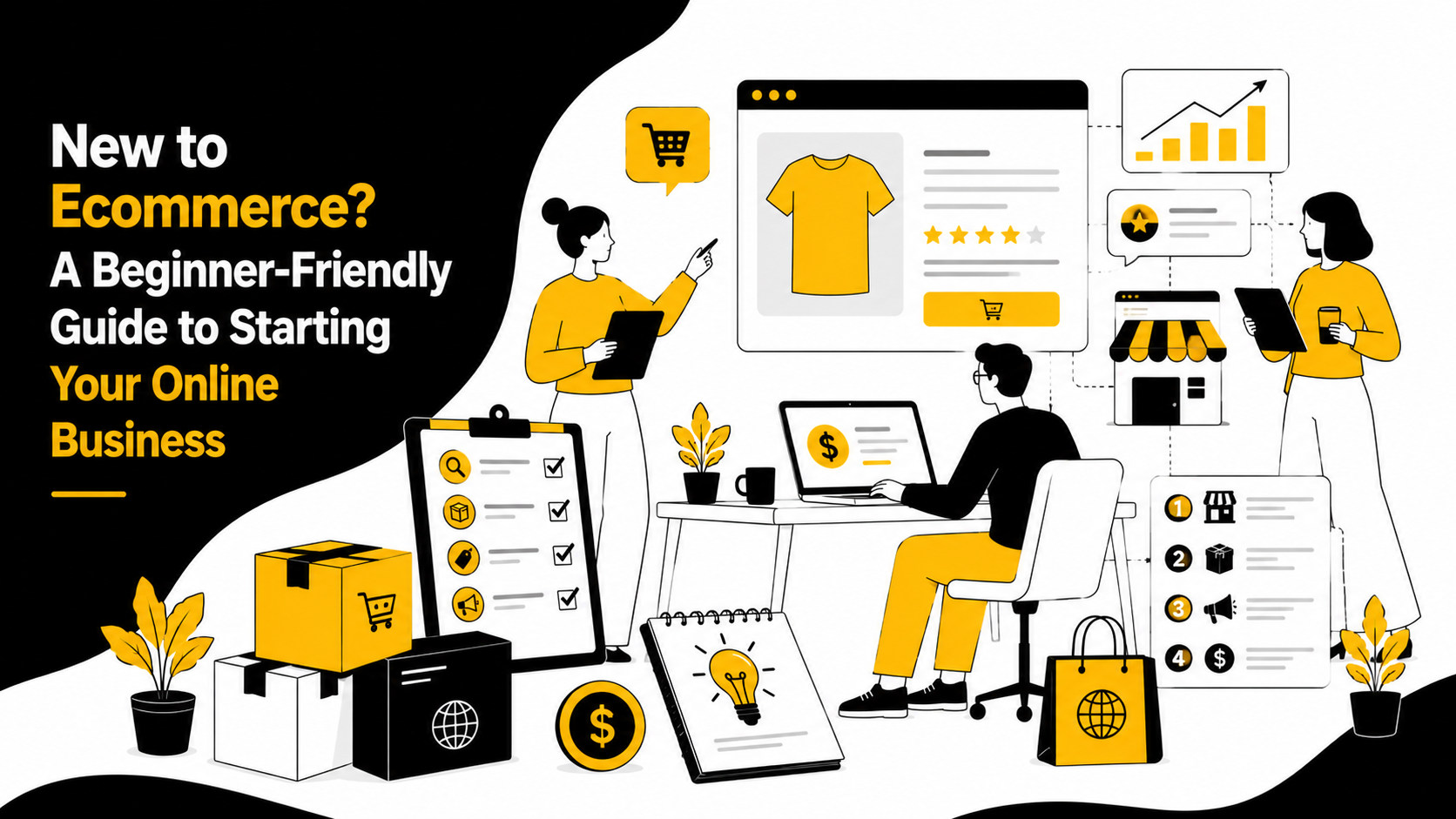
Entering the ecommerce industry can be an exciting way to build a business, sell products, and reach customers beyond your local area. However, getting started can feel overwhelming when you are unsure what to sell, which platform to choose, or how to attract your first customers.
The good news is that you do not need to build a large online store immediately. A clear plan, realistic goals, and a step-by-step approach can help you start with less confusion.
This beginner-friendly guide explains how to start an ecommerce business and build a strong foundation for future growth.
1. Choose the Right Ecommerce Model
The first step is deciding how your ecommerce business will operate. Your business model affects your products, costs, inventory, fulfillment process, and marketing strategy.
Common ecommerce models include:
-
Selling products you manufacture yourself.
-
Reselling products from wholesalers.
-
Selling white-label or private-label products.
-
Dropshipping products from suppliers.
-
Selling handmade products.
-
Selling digital products such as templates, courses, or ebooks.
-
Using print-on-demand services.
-
Offering subscription-based products.
Dropshipping, print-on-demand, and digital products are often considered accessible options for beginners because they may require less upfront inventory. However, each model has different responsibilities, profit margins, customer service requirements, and supplier risks.
Before choosing a model, consider:
-
How much money can you invest?
-
Do you want to hold inventory?
-
How quickly can you fulfill orders?
-
Do you want to create your own products?
-
How much control do you need over packaging and quality?
-
Who will manage customer service?
-
Can the model grow with your business?
Start with the model that fits your skills, budget, and available time rather than choosing one only because it is popular.
2. Select a Specific Niche
A niche is a focused segment of the market. Choosing a specific niche can make it easier to understand your customers and create relevant products and marketing content.
For example, instead of targeting everyone interested in fashion, you could focus on:
-
Comfortable workwear for women.
-
Sustainable clothing for teenagers.
-
Travel accessories for frequent flyers.
-
Skincare products for simple daily routines.
-
Home products for small apartments.
-
Educational toys for young children.
A focused niche can help you develop a stronger brand identity and create more specific product pages.
Research your target audience
Before selecting a product, learn about the people you want to serve. Consider:
-
Their age and location.
-
Their lifestyle and interests.
-
Their common problems.
-
Their purchasing habits.
-
The brands they already follow.
-
The features they value most.
-
The price range they can afford.
Read customer reviews on competing products. Reviews can show you what buyers like, what they dislike, and what improvements they want.
Validate your product idea
Do not order a large quantity of products before testing demand. Begin with research, small product samples, surveys, pre-orders, or a limited launch where possible.
Check:
-
Whether people are already searching for similar products.
-
How many competitors are selling the product.
-
Whether competitors have consistent customer demand.
-
How much customers are willing to pay.
-
Whether the product is easy and affordable to ship.
-
Whether the supplier can maintain consistent quality.
A successful product is not only one that looks interesting. It should solve a problem, meet a need, or provide a clear benefit to a specific audience.
3. Build Your Online Store
Once you have chosen your business model and product category, you can create your online store.
Your store may be built on an ecommerce platform such as Shopify or WooCommerce, or you may begin by selling through marketplaces such as Amazon, Etsy, eBay, or other relevant platforms. Building your own store gives you more control over your brand, while marketplaces may provide access to an existing customer base.
Choose a suitable platform
When comparing ecommerce platforms, consider:
-
Monthly costs.
-
Ease of use.
-
Available design options.
-
Payment features.
-
Inventory management.
-
Shipping integrations.
-
Marketplace connections.
-
Mobile responsiveness.
-
SEO capabilities.
-
Customer support.
Beginners should choose a platform they can manage confidently. A simple, well-organized store is more useful than a complicated website that is difficult to update.
Create important store pages
A basic ecommerce website should usually include:
-
Homepage.
-
Shop or product collection page.
-
Individual product pages.
-
About page.
-
Contact page.
-
Shipping information.
-
Returns and exchange policy.
-
Privacy policy.
-
Terms and conditions.
-
Frequently asked questions.
These pages help customers understand your business and find important information before placing an order.
Write clear product listings
Your product listing should explain what the product is, who it is for, and why it may be useful.
Include:
-
A descriptive product title.
-
A clear product description.
-
Main features and benefits.
-
Product size or dimensions.
-
Ingredients or materials.
-
Usage instructions.
-
Product variations.
-
Shipping information.
-
High-quality product images.
-
A clear call to action.
Unique product descriptions are important because generic supplier content may not accurately represent your brand or give customers a reason to choose your product. Ecommerce product pages should be easy to read and should answer the main questions customers have before purchasing.
4. Prepare Your Ecommerce Operations
A successful online store needs reliable systems behind the scenes. Customers may not see these processes, but they directly affect their experience.
Organize inventory
Keep accurate records of:
-
Product quantities.
-
SKUs.
-
Product variations.
-
Supplier details.
-
Restock dates.
-
Damaged or returned items.
-
Low-stock products.
Inventory mistakes can lead to canceled orders, delayed shipping, and disappointed customers.
Set up payments and shipping
Offer secure and convenient payment options that are suitable for your target market. You should also decide:
-
Which delivery areas you will serve.
-
How shipping costs will be calculated.
-
How long orders may take to arrive.
-
Which courier or fulfillment partner you will use.
-
How customers can track orders.
-
How damaged or delayed deliveries will be handled.
Explain your shipping and return policies clearly on your website. Customers should understand delivery timelines and return conditions before completing their orders.
Create customer service procedures
Prepare responses for common questions about:
-
Product details.
-
Sizing.
-
Shipping.
-
Order tracking.
-
Returns.
-
Exchanges.
-
Damaged products.
-
Product usage.
-
Payment issues.
As your business grows, an ecommerce virtual assistant can help manage product updates, order information, inventory coordination, and customer inquiries. Ecommerce virtual assistants commonly support store administration and marketplace operations.
Create simple instructions before delegating tasks. Include your brand voice, response time expectations, refund rules, escalation process, and frequently asked questions.
5. Launch and Promote Your Business
You do not need to wait until everything is perfect before launching. Once your store has accurate product information, working payment options, clear policies, and a reliable fulfillment process, you can begin testing the market.
Start with a soft launch
A soft launch allows you to test your store with a smaller audience before investing heavily in advertising.
Ask early visitors to review:
-
Website navigation.
-
Product descriptions.
-
Checkout process.
-
Shipping information.
-
Mobile display.
-
Payment experience.
-
Customer support response.
Fix any major problems before expanding your marketing efforts.
Choose suitable marketing channels
Your marketing strategy may include:
-
Search engine optimization.
-
Content marketing.
-
Email marketing.
-
Paid advertising.
-
Influencer partnerships.
-
Marketplace optimization.
-
Referral marketing.
-
Educational blog content.
Start with one or two channels that match your audience and skills. Trying to manage every marketing channel at once can make it difficult to measure what is working.
Track useful metrics
Monitor data such as:
-
Website traffic.
-
Product page views.
-
Add-to-cart rate.
-
Conversion rate.
-
Average order value.
-
Customer acquisition cost.
-
Repeat purchases.
-
Return rate.
-
Email sign-ups.
-
Customer support questions.
Use these insights to improve your products, website, product copy, and marketing strategy.
Common Beginner Mistakes to Avoid
New ecommerce business owners often make avoidable mistakes when they try to grow too quickly.
Avoid:
-
Choosing products without researching demand.
-
Ordering too much inventory too early.
-
Copying supplier descriptions.
-
Using poor-quality product images.
-
Ignoring mobile shoppers.
-
Hiding shipping or return information.
-
Launching without testing the checkout process.
-
Trying to target every type of customer.
-
Spending heavily on advertising before testing the offer.
-
Failing to track inventory accurately.
-
Ignoring customer questions and feedback.
Starting small gives you time to understand your customers and improve your systems.
How EcommerceAlly Can Help
Building an online store involves many tasks, including product listing creation, ecommerce copywriting, website content, inventory coordination, customer support, and brand management.
EcommerceAlly can help ecommerce businesses with:
-
Product listing management.
-
Ecommerce product descriptions.
-
Website copywriting.
-
Product title optimization.
-
Marketplace content.
-
Brand identity development.
-
Ecommerce virtual assistant support.
-
Customer service assistance.
-
Store administration.
-
Content planning.
A virtual assistant can also help business owners manage repetitive daily tasks, allowing them to spend more time on product research, customer relationships, and business development.
Final Thoughts
Entering the ecommerce industry does not require launching a large store with hundreds of products. A better approach is to start with a focused niche, select a suitable business model, test your product idea, and build simple systems that can grow over time.
Choose your products carefully, create clear listings, provide reliable customer service, and track your results. As your workload increases, an ecommerce virtual assistant can help manage essential store operations and keep your business organized.
With consistent effort and a customer-focused approach, your beginner ecommerce business can develop into a stronger and more recognizable online brand.